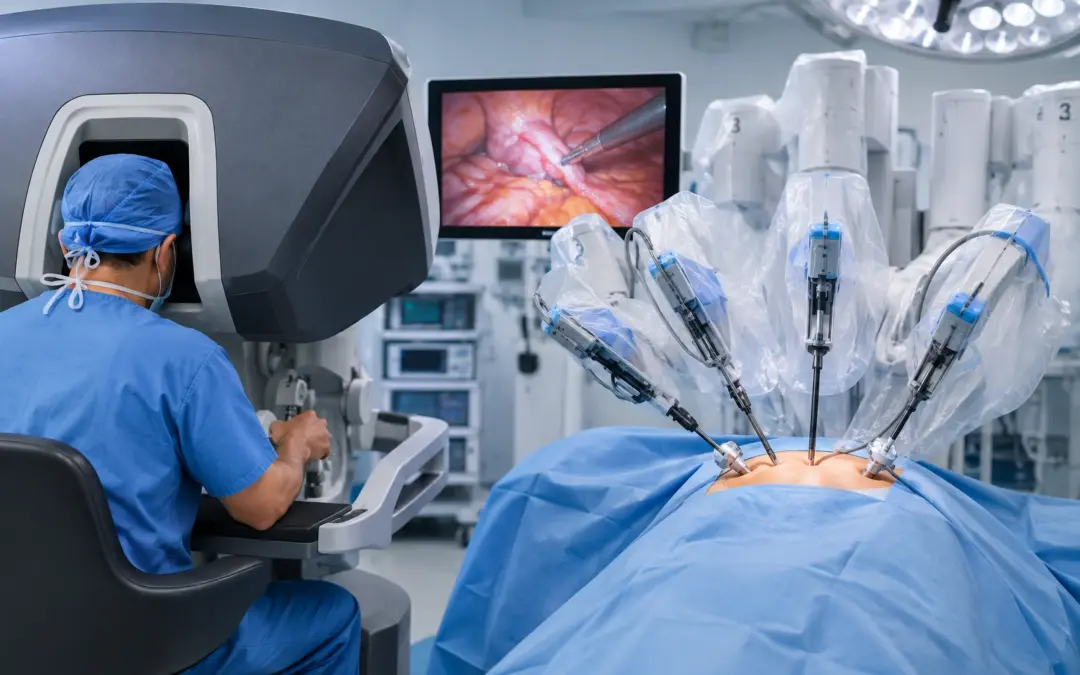
There’s no simple yes here. Gastrointestinal robotic surgery isn’t automatically the superior choice over laparoscopic or open surgery across the board, and it was never really meant to be one. What it does offer is a genuine technical edge, but only for procedures that are complex, delicate, or sitting in an awkward anatomical spot. So the honest framing isn’t “robotic versus everything else,” it’s closer to “robotic where it actually earns its place.” That distinction matters when deciding whether robotic surgery is appropriate.
According to Dr. Surendra Jasti, a Robotic Surgeon in Vijayawada, “Patients sometimes assume robotic automatically means better, and I end up correcting that assumption fairly often. A routine gallbladder case does just fine laparoscopically, honestly. Where the robotic platform earns its place is in dense scarring, tight anatomy, or a prior failed surgery. That’s where the extra precision changes the outcome itself, not just how the procedure gets done.”
Wondering whether a robotic approach genuinely suits your GI condition?
Where does robotic surgery actually outperform laparoscopic?
Not everywhere. The advantage tends to show up in a handful of specific situations.
Complex Anatomy Cases: If a prior surgery left dense scarring or shifted the normal anatomy, a magnified, steady view genuinely helps here. Surgeons are less likely to convert to open surgery mid-procedure when they can actually see what they’re working around.
Recurrent Conditions: Operating on the same spot twice, say a hernia that’s come back, is a different challenge altogether. Old tissue doesn’t behave the way it did the first time, and finer instrument control tends to matter more than people expect.
Deep Pelvic or Upper GI Work: Try reaching the upper stomach or lower rectum with a straight instrument and you’ll understand the problem fast. Wristed movement gets into corners that flat laparoscopic tools just can’t.
Tissue-Sparing Precision: Working near a major vessel or nerve leaves little room for error. A steadier hand cuts down on accidental nicks, and fewer nicks usually means a smoother recovery.
None of this makes robotics the default choice. It makes it the better choice in specific, identifiable situations, and our hernia treatment page shows how that distinction plays out for one procedure where recurrence often tips the decision.
Where does laparoscopic or open surgery still hold its ground?
Robotic isn’t automatically the right call just because it’s available.
Straightforward Procedures: A first-time hernia, an uncomplicated gallbladder removal, these rarely need anything more than a standard laparoscopic approach. Paying extra for the robotic platform here doesn’t usually change the outcome.
Time-Sensitive Cases: An unstable patient doesn’t have time for console setup. When minutes matter, speed wins over incremental precision, every time.
Cost-Conscious Decisions: Robotic surgery costs more,and that gap isn’t always worth paying for a low-complexity case. Better to have that conversation openly than assume newer automatically means the right choice.
Equipment and Access Limits: Plenty of hospitals in Vijayawada simply don’t have a robotic platform yet. So sometimes the decision gets made by what’s available, not by what’s technically preferable.
So the real answer sits somewhere in the middle, and that’s not a dodge, it’s just accurate. We looked at this same case-by-case logic across different procedures in our post on which surgeries use robotic technology, if you’d like the fuller picture.
Why choose Dr. Surendra Jasti for robotic GI surgery?
Dr. Surendra Jasti brings over 26 years of experience in general and gastrointestinal surgery and more than 13,000 procedures to that judgment call. His training includes an MS in General Surgery, an MCh in Surgical Gastroenterology and advanced training in Laparoscopic and Robotic Surgery.
Knowing when robotic surgery actually helps, rather than reaching for it just because the equipment happens to be there, is really the whole skill. That kind of judgment only comes from years of surgical experience across different approaches and understanding where robotic technology can add value.
Frequently Asked Questions
Is robotic surgery always better than laparoscopic surgery for GI conditions?
Not always. Complex or recurrent cases see real advantages, but for a straightforward procedure, laparoscopic often gets you to the same result
What GI procedures benefit most from a robotic approach?
Dense scarring, recurrent hernias, and tight anatomical spaces tend to be where the benefit shows up most clearly.
Does robotic GI surgery take longer than laparoscopic surgery?
Usually, yes, mainly because of console setup and docking. That extra time is often worth it if it means fewer conversions to open surgery.
Is robotic GI surgery available at every hospital in Vijayawada?
No, not yet. It comes down to whether a hospital has actually invested in the robotic platform and has surgeons and surgical teams trained to use it
References
NIH (PMC) – Robotic Gastrointestinal Surgery → https://pmc.ncbi.nlm.nih.gov/articles/PMC6377083/
NIH (PMC) – Robot-Assisted versus Laparoscopic Gastrointestinal Surgery: A Systematic Review and Meta-analysis of Intra- and Post-Operative Complications → https://www.ncbi.nlm.nih.gov/pmc/articles/PMC10532788/
Disclaimer
This blog is for general informational purposes only and is not a substitute for professional medical advice. Always consult a qualified doctor regarding your specific condition.