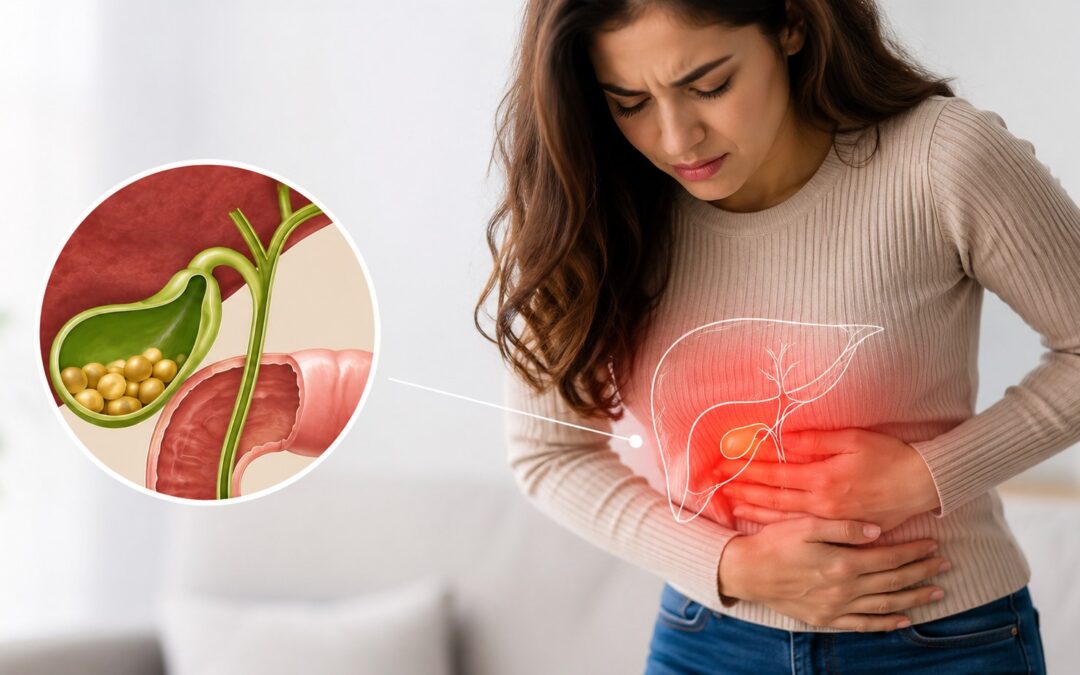
Sometimes yes, but not often and rarely for good. A handful of non-surgical options can shift small stones, mainly bile-dissolving tablets, and they suit a narrow group. People too unfit for an operation. Or those with tiny cholesterol stones and no symptoms at all. The catch is simple. The gallbladder that made the stones is still sitting there, so they usually come back. For anyone with pain or repeated attacks, taking it out stays the only fix that really lasts.
According to Dr. Surendra Jasti, a Laparoscopic Surgeon in Vijayawada, “Patients often ask if a tablet can melt their stones. Sometimes, for the tiny cholesterol ones, but they tend to return. Once the stones start causing trouble, surgery is usually the cleaner answer.”
Worried your gallstones might need surgery, or hoping they will not?
What non-surgical options actually exist?
A handful of treatments can clear stones without an operation. Each has a narrow use and a catch.
Oral dissolution tablets: Bile acid medicines like ursodiol can slowly dissolve small cholesterol stones, sometimes over a year or two. They do not work on every stone, and many return once you stop taking them.
ERCP for duct stones: If a stone slips into the bile duct, an endoscopic procedure can fish it out. That clears the duct, but it leaves any stones still sitting in the gallbladder.
Shock wave therapy: Sound waves can break stones into fragments. It is rarely used today, suits very few patients, and the recurrence rate is high.
Diet and lifestyle: A higher-fibre, lower-fat diet can ease symptoms and cut the odds of new stones. It will not dissolve the ones you already have, whatever the home remedies promise.
When stones keep flaring, or an attack turns serious, getting assessed for gallbladder surgery saves a lot of trial and error.
When is surgery the better choice?
For most people with symptoms, the non-surgical route runs out of road. These are the signs it is time to operate.
Symptoms keep returning: Pain, nausea, or attacks after fatty meals mean the stones are active. Tablets rarely keep pace with that.
Complications have started: Infection, jaundice, or pancreatitis from a blocked duct push this from optional to urgent.
The stones are large or many: Bigger stones do not dissolve, and a crowded gallbladder flares far more often.
Recurrence is the real catch: Even when medicine clears small stones, they tend to come back, because the gallbladder keeps making them. Removing it ends the cycle for good.
The operation is keyhole and the turnaround is quick. Our post on gallbladder recovery walks through what the days after look like.
Why choose Dr. Surendra Jasti for gallbladder surgery
Dr. Surendra Jasti has handled gallbladder and GI cases for more than 26 years, with over 13,000 surgeries behind him, hernia and weight loss work included. His qualifications run MBBS, an MS in General Surgery, and an MCh in Surgical Gastroenterology, alongside memberships with IAGES and MCI.
For gallstones, that means an honest call on whether you even need surgery, a clean keyhole removal when you do, and follow-up that does not stop at discharge. No rushing you under the knife, and no dragging out a problem that needs fixing.
Frequently Asked Questions
Can gallstones go away on their own?
Not really. They do not melt away by themselves. Small, quiet ones can sometimes be left and watched, but they will not vanish.
Do gallstone-dissolving tablets really work?
For small cholesterol stones, sometimes. The snag is speed and staying power. It takes months, and the stones often creep back once the tablets stop.
Can diet remove gallstones?
No. A good diet can calm the symptoms and hold off new stones, but it cannot shift the ones already sitting there.
Is surgery the only permanent solution?
For most people with symptoms, pretty much. Take the gallbladder out and there is nothing left to keep forming stones.
References
- NIDDK (NIH) – Treatment for Gallstones → https://www.niddk.nih.gov/health-information/digestive-diseases/gallstones/treatment
- MedlinePlus (NIH) – Ursodiol → https://medlineplus.gov/druginfo/meds/a699047.html
Disclaimer
This blog is for general informational and educational purposes only and is not a substitute for professional medical advice, diagnosis, or treatment. Always consult a qualified doctor or surgeon regarding your specific condition.