
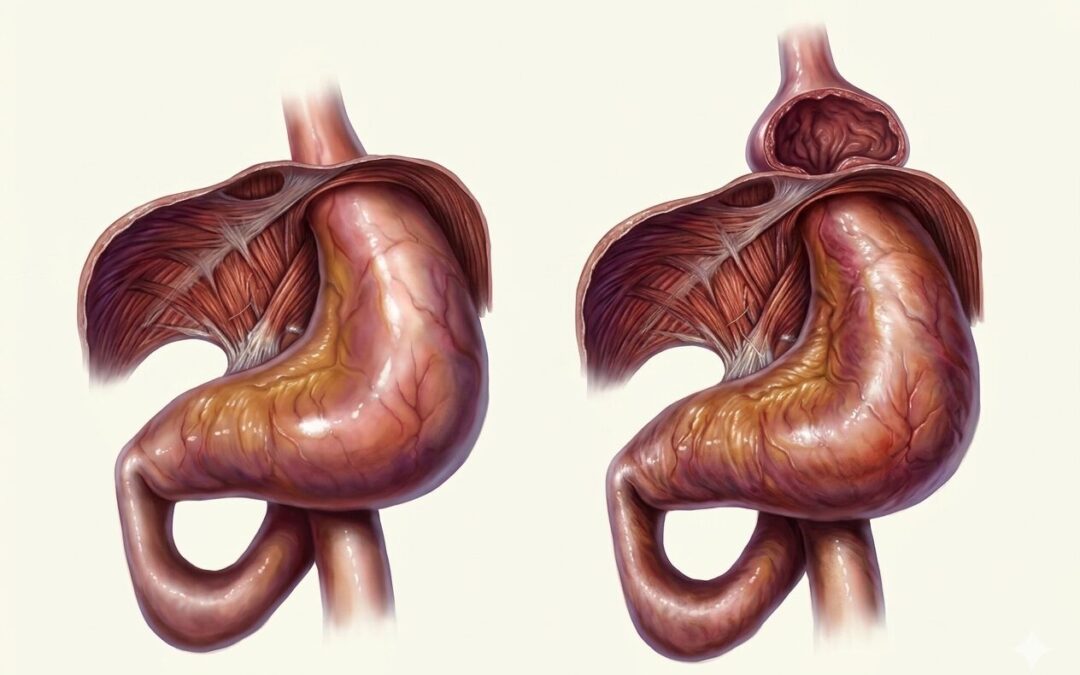
A hiatal hernia is when the upper part of your stomach pushes up through the diaphragm, the muscle separating your abdomen from your chest, into the chest cavity. Most are small and cause little trouble, and they settle with medication and a few habit changes. It needs surgery when the hernia is large, the reflux stops responding to medicine, or the stomach is at risk of getting trapped. Size and type decide the path.
According to Dr. Surendra Jasti, a Robotic Surgeon in Vijayawada, “Most hiatal hernias I see never reach an operating table. The ones that do are usually large, or the reflux has stopped responding to tablets. That is the line I watch for.”
Reflux that just will not quit, even on your regular medication?
Book a Consultation with Dr. Surendra Jasti If You Want to know when a hiatal hernia needs surgery.
What does recovery look like week by week?
There are two main types of hiatal hernia, and the difference decides how much it matters.
- The basic problem: That little gap in the diaphragm has a name, the hiatus. The food pipe runs through it. Let the stomach muscle its way up through the same gap, and there is your hiatal hernia.
- Sliding type: The common one, easily. The spot where food pipe meets stomach slides up, then drops back. Half the time you would never know. Now and then it nags with heartburn.
- Paraesophageal type: Rarer, and the one to respect. A chunk of stomach pushes up beside the food pipe and can wedge itself there. When surgery comes up, it is usually this kind.
- Why it shows up: Tissue loosens with age, plain and simple. Pile on extra pressure, weight, a pregnancy, a cough that drags on for months, and the gap gives.
Large hernias and stubborn symptoms are worth a proper look. A consultation about hernia surgery gives you a clear answer instead of guesswork.
When does a hiatal hernia actually need surgery?
Most delays are not bad luck. They come from a handful of avoidable habits.
- Lifting too early: This is the big one. The skin looks healed long before the inside is, and a heavy bag at week two can undo the repair.
- Neglecting the wounds: Keep them dry and check them daily. Redness, swelling, or any fluid leaking out is a phone call, not a wait-and-watch.
- Eating like nothing happened: Rich, fatty meals do not sit well for the first few weeks. Go smaller and lighter, and your gut settles quicker.
- Doing too much, too soon: Rest is the actual treatment here, not a holiday from it. Push through the tiredness and you only drag recovery out.
- Ignoring warning signs: Fever, a yellow tint to the skin, pain that keeps climbing, or vomiting. None of those wait until morning.
The basics carry across keyhole surgery. Most of what helps with hernia recovery works here too.
Why choose Dr. Surendra Jasti for hernia surgery?
Dr. Surendra Jasti has handled hernia and GI cases for more than 26 years, with over 13,000 surgeries to draw on, gallbladder and weight loss work among them. His qualifications include an MBBS, an MS in General Surgery, and an MCh in Surgical Gastroenterology, and he is a member of both IAGES and the MCI.
For a hiatal hernia, that track record matters in the details. He works out the real cause before any operation, repairs it through a 4K laparoscopic system, and keeps following up after you go home. You walk away with a fix that is built to last.
Frequently Asked Questions
Is a hiatal hernia dangerous?
Usually not. The small ones mostly sit quietly and are handled with medication.
Can a hiatal hernia heal without surgery?
It will not close by itself, but tablets and a few habit changes often keep the symptoms in check.
What surgery is used for a hiatal hernia?
A keyhole repair, often with a fundoplication wrapped in to settle the reflux.
How do I know if mine needs surgery?
If the symptoms keep going despite medication, or the hernia is large, have a surgeon take a look.