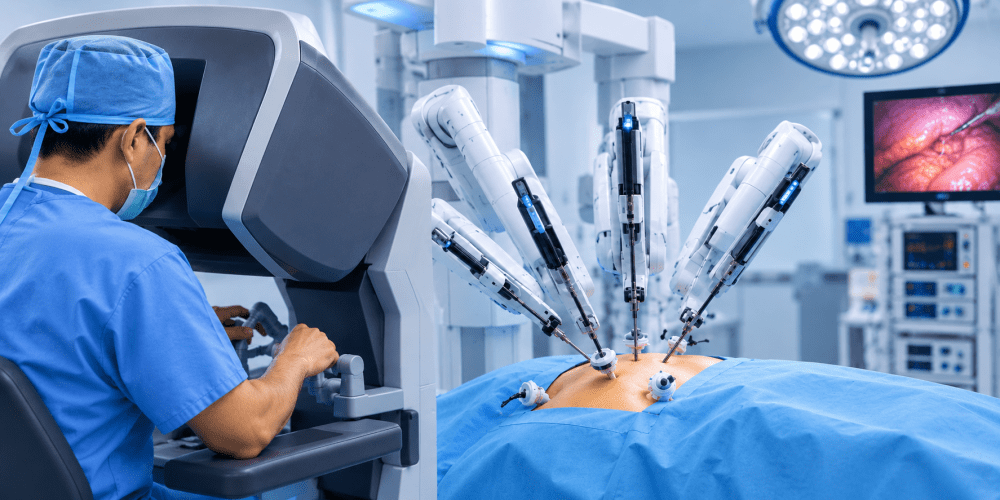
By most measures, yes. Robotic-assisted procedures carry a solid safety record, offering real precision and fewer complications than a traditional open operation, though the actual numbers still depend on the procedure and the surgeon behind the console.
According to Dr. Surendra Jasti, a Robotic Surgeon in Vijayawada, “Patients ask me this before almost every robotic case. Complication rates run lower than open surgery, but the real safety margin comes down to the surgeon’s experience with the platform, not the platform itself.”
Weighing whether a robotic approach is the safer option for your condition?
What makes robotic surgery generally safe?
Several factors stack together, and none of them work alone.
Smaller Incisions: Lower infection risk and less blood loss compared with open surgery. The wound heals faster too, since there’s simply less tissue disruption to begin with.
Steadier Movement: Tremor filtering cuts the chance of accidental injury to nearby tissue. Even a slight hand shake gets smoothed out before it ever reaches the instrument tip.
Better Visualization: A magnified 3D view catches details a naked eye might miss. That extra depth perception matters most in tight or scarred spaces.
Faster Recovery: Shorter hospital stays generally mean fewer post-operative complications overall. Patients often return to normal activity within days rather than weeks.
None of this removes risk entirely, it just shifts where that risk sits, from tissue trauma toward equipment and technique. Our hernia treatment page shows how that trade-off plays out for one specific procedure.
Are there real risks worth knowing about?
Robotic surgery isn’t automatically the safer pick in every situation.
Longer Setup Time: Console positioning and docking can add time to an otherwise simple case. For a quick procedure, that extra setup can outweigh the benefit.
Cost Considerations: Equipment expense may not suit every patient or every condition. It’s worth discussing upfront rather than assuming robotics is always the better value.
Learning Curve Effect: A newer robotic surgeon may take longer to reach an experienced surgeon’s results. Ask about the surgeon’s case volume, not just whether the hospital has the equipment.
Not Always Needed: A simple case handled well laparoscopically may not need the added complexity. More technology doesn’t automatically mean a better outcome.
So safety is real, but it isn’t automatic, it depends on matching the right case to the right tool. We explained the mechanics behind that decision in our post on how robotics work, if you’d like the fuller picture.
Why choose Dr. Surendra Jasti for robotic surgery?
Dr. Surendra Jasti brings over 26 years in general and gastrointestinal surgery and more than 13,000 procedures to that judgment call. His training spans an MS in General Surgery, an MCh in Surgical Gastroenterology and advanced training in Laparoscopic and Robotic Surgery.
Safety isn’t really a feature of the machine, it’s a product of who is operating it and how many times they’ve made that exact call before. That matters even more in a city like Vijayawada, where robotic surgery is still relatively new at many hospitals.
Frequently Asked Questions
Is robotic surgery riskier than laparoscopic surgery?
Not generally. Most data shows similar or lower complication rates, though outcomes vary by procedure and surgeon experience.
What are the most common complications in robotic surgery?
Bleeding, infection, and rare injury to nearby organs, largely the same risks seen in any minimally invasive procedure.
Does robotic surgery reduce infection risk?
Yes, in most cases. Smaller incisions mean less exposed tissue and a lower chance of surgical site infection.
Who should not undergo robotic surgery?
Patients with certain heart or lung conditions, or extensive prior abdominal surgery, may need a different approach after assessment.
References
- NIH (BJS Open) – Research Quality, Outcome Measurement and Evidence for Safety and Effectiveness in Robot-Assisted Surgery: Systematic Review → https://www.ncbi.nlm.nih.gov/pmc/articles/PMC7709372
- NIH (PMC) – Safety, Efficacy, and Effectiveness of Robotic Surgery in General and Digestive Surgery → https://www.ncbi.nlm.nih.gov/pmc/articles/PMC11718919/
Disclaimer
This blog is for general informational and educational purposes only and is not a substitute for professional medical advice, diagnosis, or treatment. Always consult a qualified doctor or surgeon regarding your specific condition.