Robotic Gastrectomy in Vijayawada
There are some doubts that arise when a diagnosis in the stomach leads to a surgical intervention in the patient’s life. In this case, patients would like to know how much stomach should be cut out during the surgery, what the process of this operation is, and how one can recover from it.
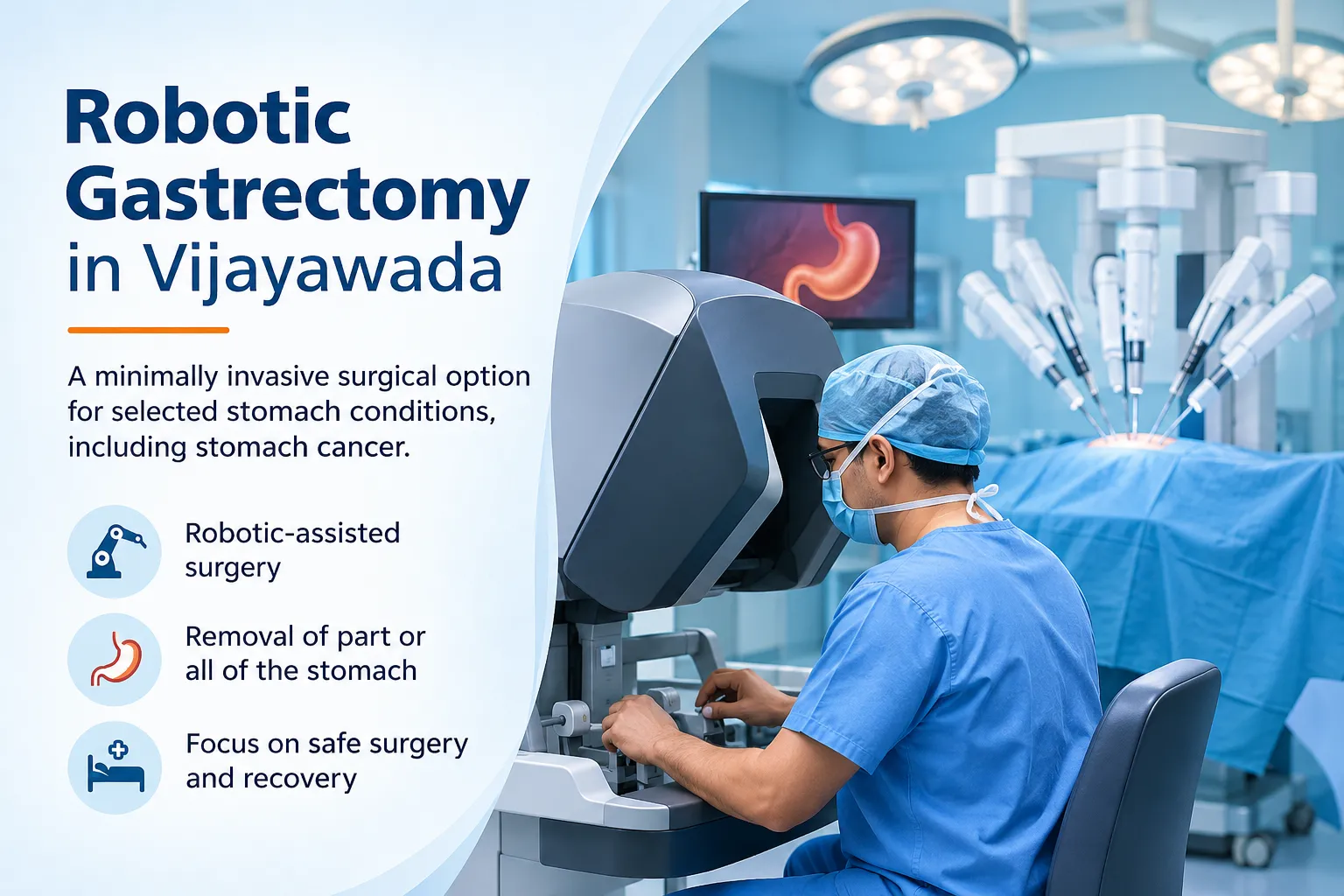
Robotic gastrectomy in Vijayawada is a surgical procedure involving the use of robotic devices operated directly by the surgeon to remove part or whole stomach. The surgeon monitors the operating area using a 3D camera.
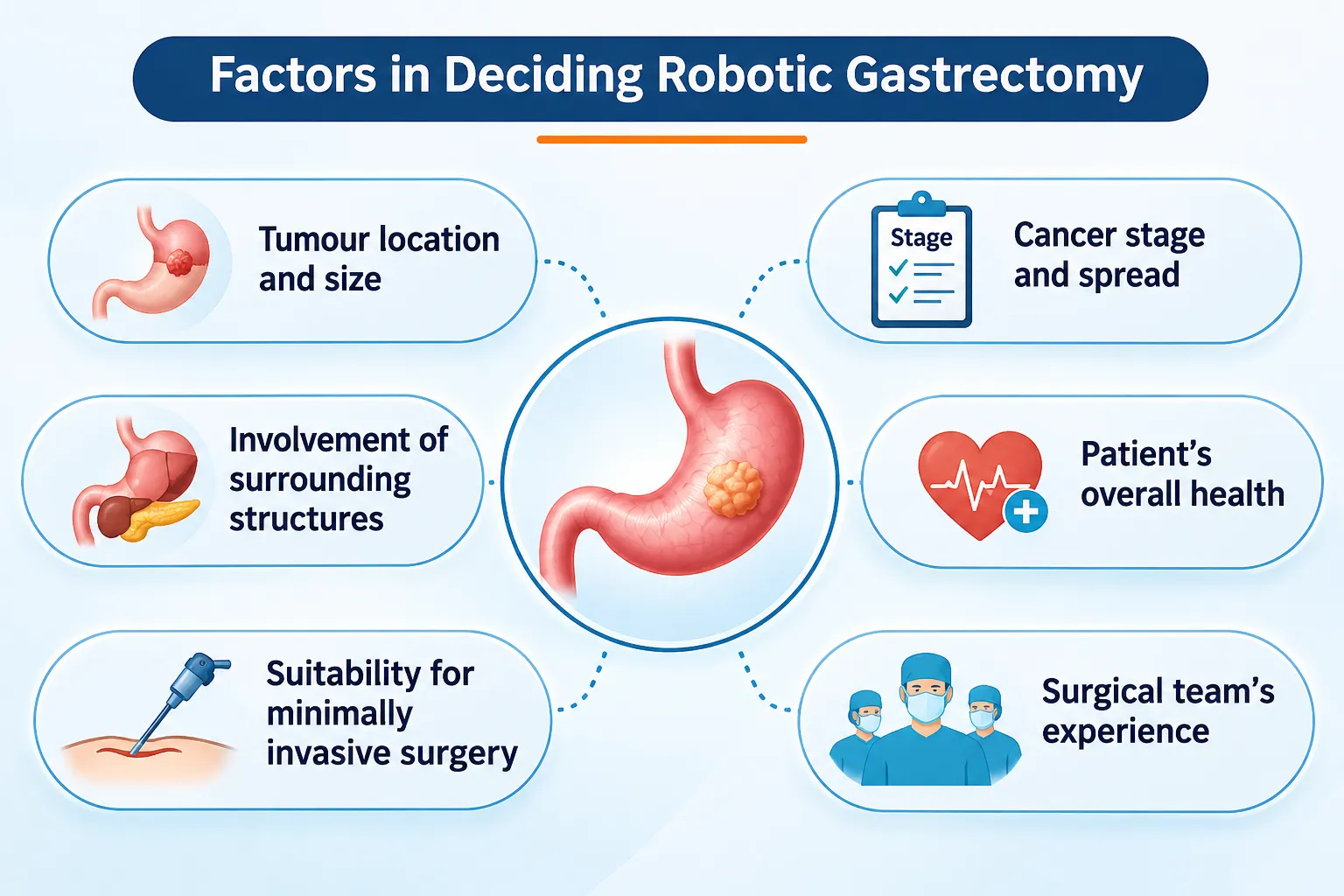
In certain cases, robotic gastrectomy can be used as a method of treating stomach cancer. In this case, the tumor location, its stage and patient’s state of health will play an important role. Dr. Surendra Jasti is specialized in Robotic gastro surgery.
What Is Gastrectomy?
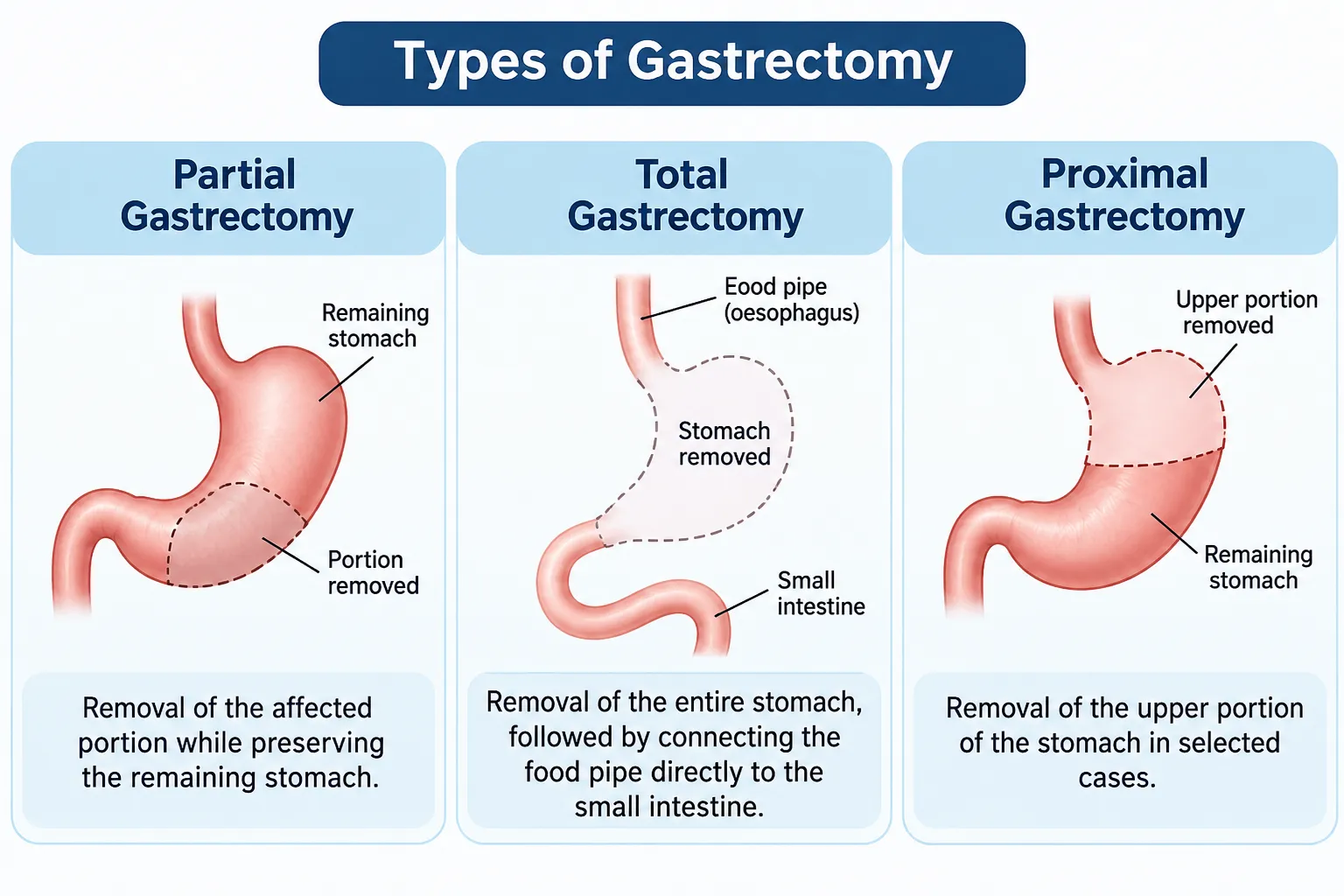
Gastrectomy is an operation in which part or all of the stomach is removed. It is commonly performed to treat stomach cancer.
The type of surgery depends on the location and extent of the disease.
What Is Robotic Gastrectomy?
Robotic gastrectomy uses a robotic surgical system to assist the surgeon during stomach removal surgery.
The system provides:
- Magnified 3D visualisation.
- Flexible instruments with wrist-like movements.
- Controlled instrument movements.
- Access to certain confined surgical areas.
The robot does not perform the operation independently. Every movement is controlled by the surgeon.
When Is Robotic Gastrectomy Recommended?
Robotic gastrectomy may be considered for selected patients with resectable stomach cancer, meaning cancer that can potentially be removed through surgery.
Not every stomach cancer requires gastrectomy. Some early-stage cancers may be treated through endoscopic procedures, while other cases may require chemotherapy or a combination of treatments.
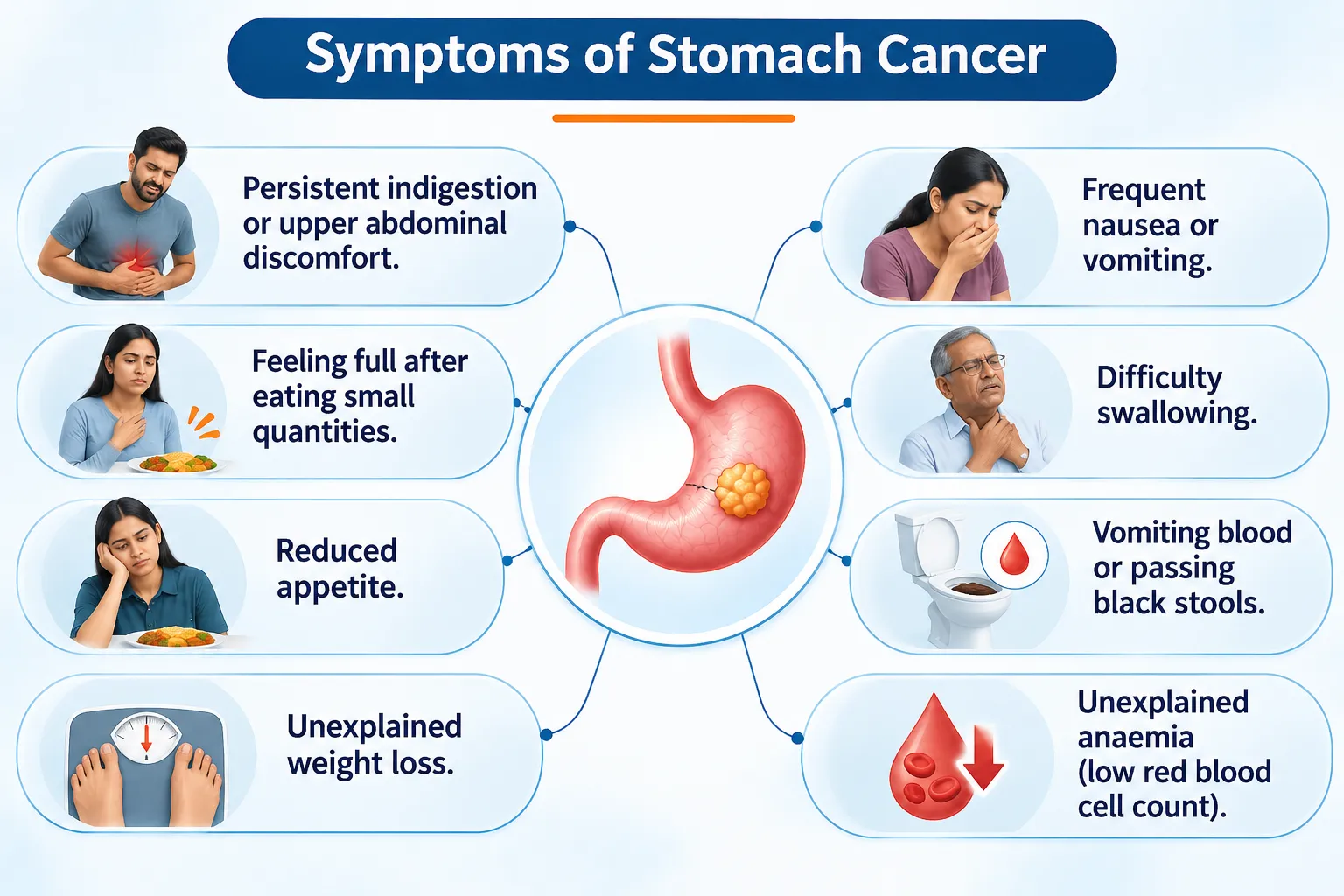
What Are the Symptoms of Stomach Cancer?
Early stomach cancer may not produce noticeable symptoms. As the condition progresses, patients may experience:
These symptoms can also occur with other digestive conditions. Persistent or worsening symptoms should be medically evaluated.
How Is Stomach Cancer Diagnosed?
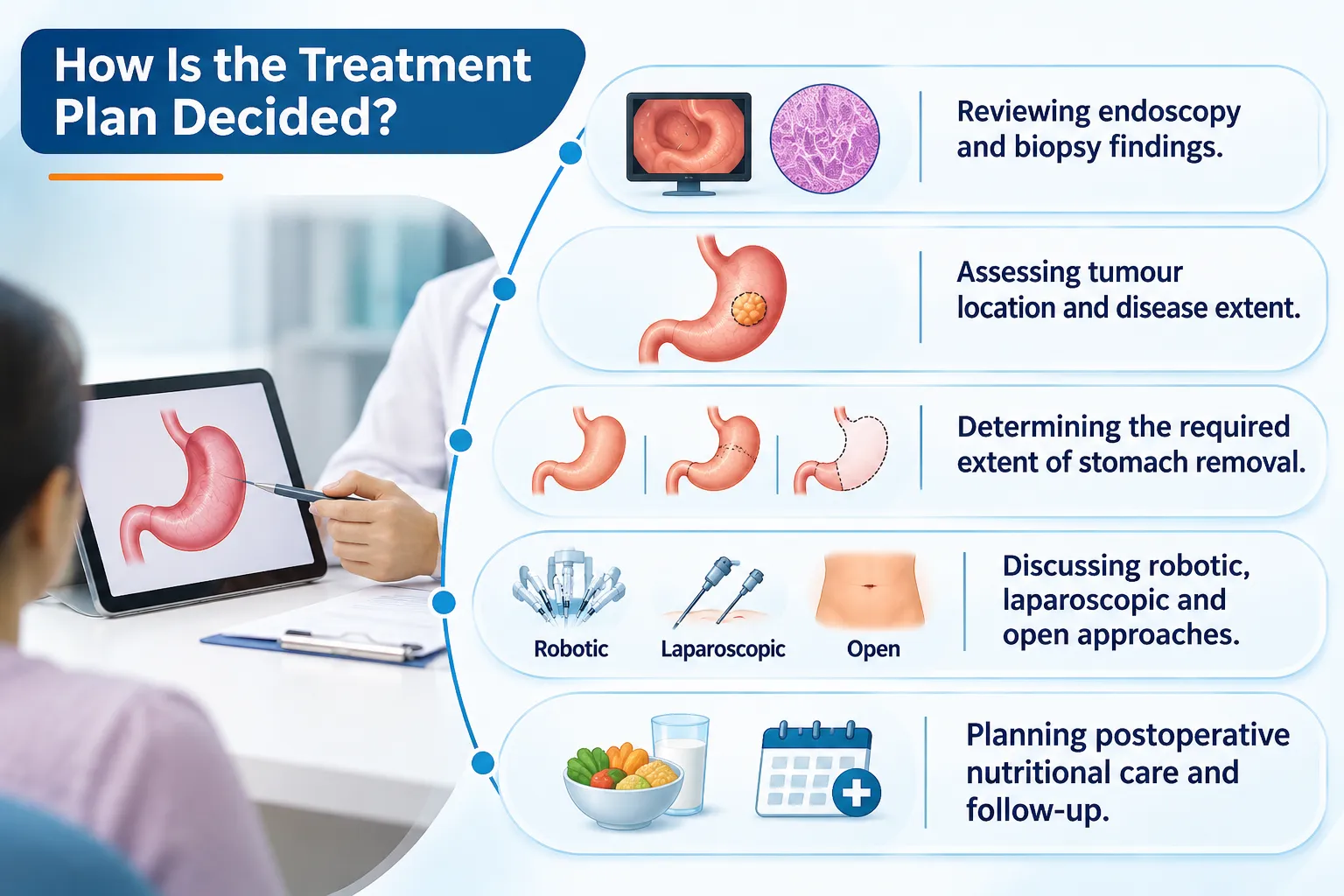
Doctors use different investigations to confirm the stomach cancer diagnosis and determine the extent of the disease.
Upper GI Endoscopy
A flexible camera is passed through the mouth to examine the stomach and collect tissue samples when necessary.
Biopsy
A tissue sample is examined under a microscope to confirm whether cancer cells are present.
CT Scan
Provides detailed images to assess tumour extent and possible spread.
Endoscopic Ultrasound
Helps evaluate how deeply the tumour has grown into the stomach wall.
Additional blood tests and imaging may be recommended depending on the findings.
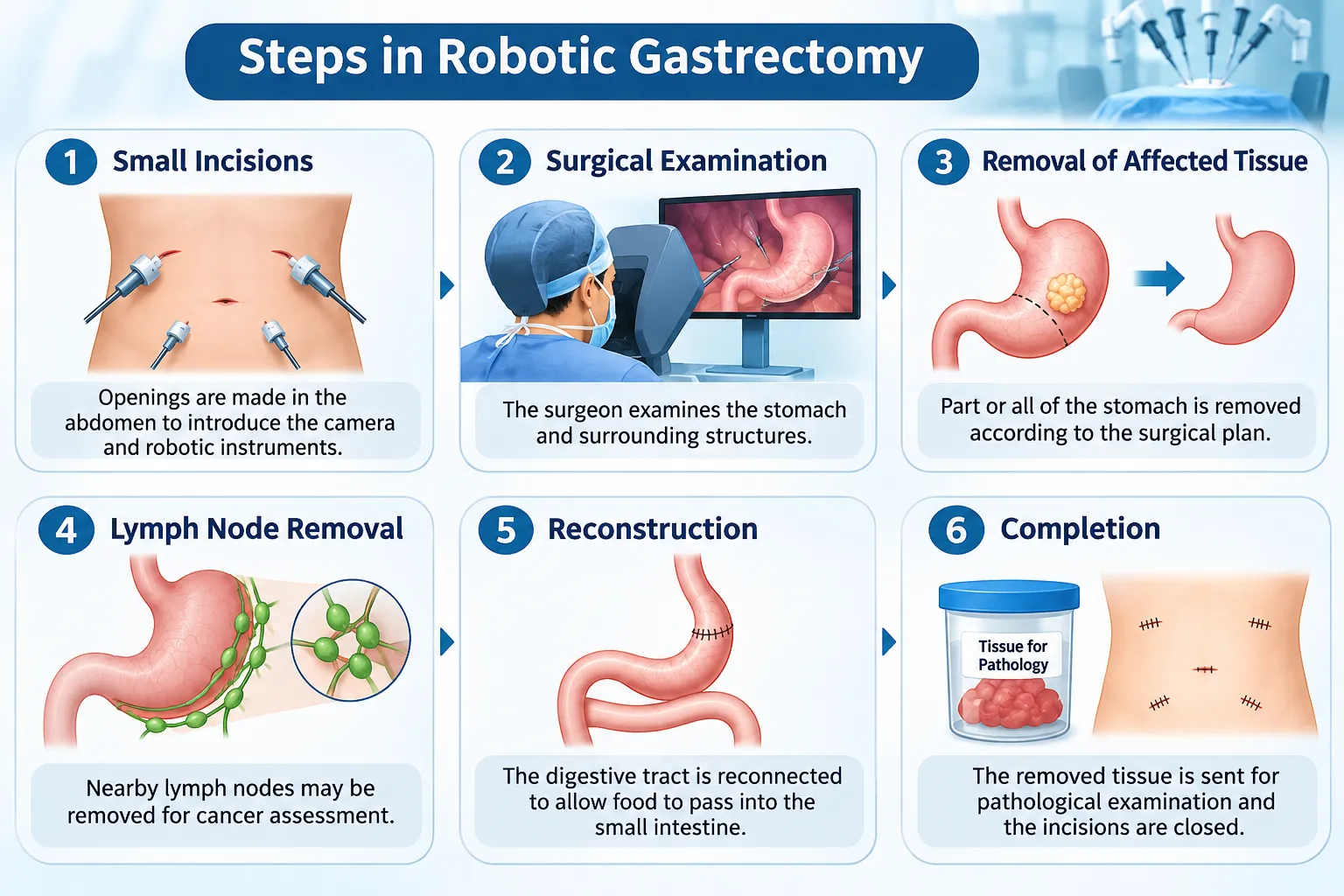
How Is Robotic Gastrectomy Performed?
The procedure is performed under general anaesthesia and generally involves the following steps:
Potential Benefits of Robotic Gastrectomy
Robotic technology provides certain features that may assist during complex stomach operations.
Potential advantages include:
- Magnified 3D visualisation.
- Greater flexibility of surgical instruments.
- Controlled movements during delicate procedures.
- Access to confined anatomical areas.
- Smaller incisions compared with open surgery.
These technical features do not guarantee better outcomes. Results depend on disease extent, surgical expertise and individual health.
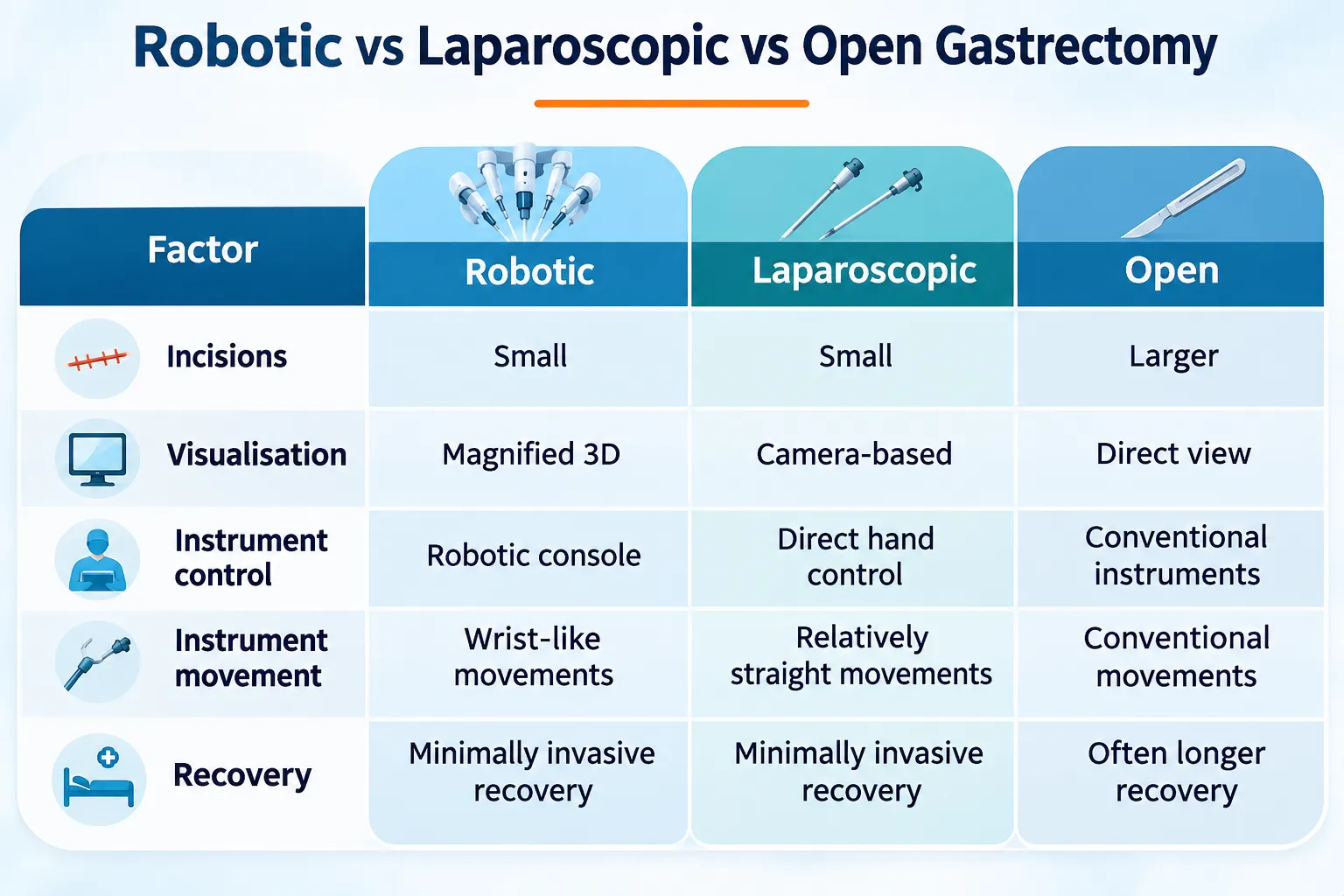
Robotic vs Laparoscopic vs Open Gastrectomy
The appropriate approach depends on the patient’s condition and surgical requirements. Robotic surgery is not automatically superior to other techniques.
How Should Patients Prepare for Surgery?
Before gastrectomy, the medical team may recommend:
Blood tests and imaging.
Review of endoscopy and biopsy reports.
Nutritional assessment.
Anaesthesia fitness evaluation.
Review of existing medicines.
Instructions regarding food and fluids before surgery.
Patients should inform the doctor about existing medical conditions and previous operations.
Recovery After Robotic Gastrectomy
Recovery takes time because the digestive system needs to adjust after stomach removal.
Patients may initially receive fluids or nutrition through a drip or feeding tube, depending on the procedure and recovery progress.
After surgery, patients may be advised to:
Eat smaller meals more frequently.
Chew food thoroughly.
Eat slowly.
Include adequate protein.
Follow dietary recommendations.
Attend nutritional assessments and follow-up appointments.
Some patients may require vitamin B12 and other nutritional supplements, depending on the extent of stomach removal.
Risks and Possible Complications
Gastrectomy is a major operation, and robotic assistance does not eliminate surgical risks.
Possible complications include:
Bleeding and infection.
Chest infection.
Blood clots.
Leakage from the digestive connection.
Delayed bowel function.
Nutritional deficiencies.
Injury to surrounding organs.
Need for additional surgery.
Patients should seek medical attention for persistent vomiting, increasing abdominal pain, fever, wound discharge or difficulty tolerating fluids. Severe pain, chest pain or breathing difficulty requires emergency assessment.
What Happens After Gastrectomy?
The removed tissue undergoes pathological examination to assess the tumour, surgical margins and lymph node involvement.
Depending on the findings, additional treatment such as chemotherapy may be recommended. Regular follow-up also helps monitor nutritional health, weight changes and recovery.
Factors Affecting Robotic Gastrectomy Cost in Vijayawada
The overall cost depends on:
Type of gastrectomy.
Complexity and stage of cancer.
Investigations required.
Robotic equipment and consumables.
Hospital stay and anaesthesia.
Additional cancer treatment.
Postoperative nutritional care.
An estimate can be prepared after reviewing the diagnosis and proposed treatment plan.
Approach for Robotic Gastrectomy in Vijayawada
Dr. Surendra Jasti specialises in Surgical Robotic Gastroenterology, which involves the surgical management of conditions affecting the digestive system.
The final treatment approach should be based on individual clinical findings and discussion with the treating surgical team.
Frequently Asked Questions
1. Define robotic gastrectomy.
This is an operation using robotic instruments to surgically remove a portion or the whole of the stomach.
2. Can robotic gastrectomy be done to treat stomach cancer?
Yes. Robotic gastrectomy can be recommended for certain patients with stomach cancer depending on tumour site and stage of the disease.
3. Can someone survive without having a stomach?
Yes. In the case of total gastrectomy, the oesophagus is directly attached to the small intestine but one’s dietary needs will be different.
4. Robotic gastrectomy is superior to laparoscopy.
Both can be applied depending on the individual case. The best technique will depend on the status of the patient and the needs of the surgery.
5. Chemotherapy following gastrectomy is necessary.
Chemotherapy is not necessary for everyone who undergoes gastrectomy.
Medical Disclaimer: This content is intended for general patient education and should not replace medical consultation or individual treatment advice. The decision to undergo robotic gastrectomy requires evaluation by a qualified surgical team.