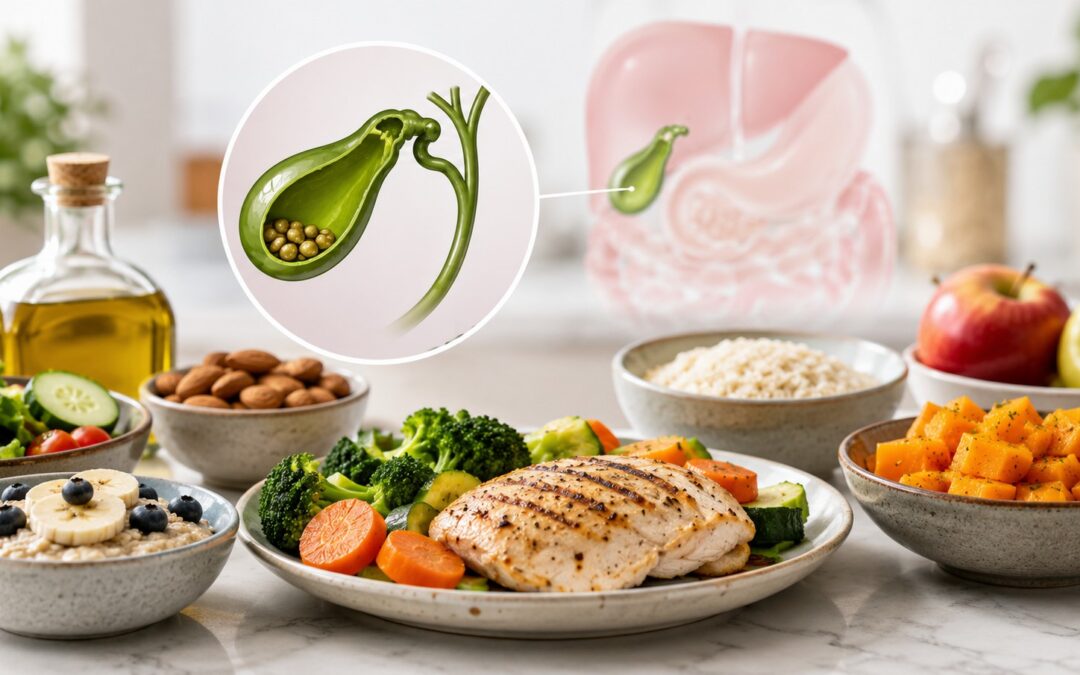
After gallbladder removal, eat low-fat, high-fibre meals in small, frequent portions for the first few weeks. Five or six light meals a day suit most people better than three big ones. Without a gallbladder, bile drips steadily into your gut instead of being stored and released on demand, so large or greasy meals are harder to handle and can bring on bloating, gas, and loose motions. Most people ease back to a normal balanced diet within four to six weeks.
According to Dr. Surendra Jasti, a Laparoscopic Surgeon in Vijayawada, “The body adjusts faster than people expect. Keep meals small and light for a few weeks, go easy on oil, and most patients are back to eating normally within a month or so.”
Stomach still unsettled weeks after your gallbladder surgery?
What should you eat in the first few weeks?
The early weeks are about keeping meals light while your gut learns to manage bile on its own.
- Lean proteins: Skinless chicken, fish, eggs, and dals are easy on digestion and help healing. Keep them grilled, steamed, or boiled rather than fried.
- Whole grains and fibre: Oats, brown rice, and whole wheat keep things moving and steady your bowel habits. Add fibre back slowly, since too much too soon can bloat you.
- Fruits and vegetables: Cooked or soft vegetables and most fruits go down well. They bring vitamins without the fat load.
- Low-fat dairy: Skimmed milk, low-fat curd, and a little paneer usually sit fine. Full-fat versions can set off loose motions early on.
If digestion stays off long after your gallbladder surgery, it is worth a review rather than just riding it out.
What should you avoid, and why?
A few foods reliably cause trouble in the early weeks. These are the ones to ease off first.
- Fried and greasy food: Samosas, pakoras, deep-fried snacks. Fat is the hardest thing to digest now, and it is the usual reason for post-meal diarrhoea.
- Rich, oily curries: Heavy gravies and butter-laden dishes dump a lot of fat on the gut in one go. Lighter cooking sits far better.
- Full-fat dairy and red meat: Cream, cheese, and fatty cuts are slow to break down without stored bile. Save them for later, in small amounts.
- Too much at once: Even healthy food in a big meal can backfire. Smaller plates, more often, beats one heavy sitting.
Diet is only part of getting back to normal. Our post on gallbladder recovery covers the rest of the timeline.
Why choose Dr. Surendra Jasti for gallbladder surgery
Dr. Surendra Jasti has handled gallbladder and GI cases for more than 26 years, with over 13,000 surgeries behind him, hernia and weight loss work included. His qualifications run MBBS, an MS in General Surgery, and an MCh in Surgical Gastroenterology, alongside memberships with IAGES and MCI.
For gallbladder patients, that means a clean keyhole removal, clear advice on eating afterward, and follow-up that does not stop at discharge. If your digestion is slow to settle, you have someone to call rather than guess.
Frequently Asked Questions
How long do I need a special diet after gallbladder removal?
Usually four to six weeks. Most people then ease back to a normal balanced diet.
Why do I get diarrhoea after eating fatty food now?
Bile drips in constantly without a gallbladder, so fat is harder to digest and can loosen motions.
Can I ever eat normally again?
Yes. Most people return to a regular diet once the gut adjusts, just with less heavy, greasy food.
Should I take any supplements?
Focus on a balanced diet first, and ask your doctor if diarrhoea drags on or you feel run down.
Disclaimer
This blog is for general informational and educational purposes only and is not a substitute for professional medical advice, diagnosis, or treatment. Always consult a qualified doctor or surgeon regarding your specific condition.